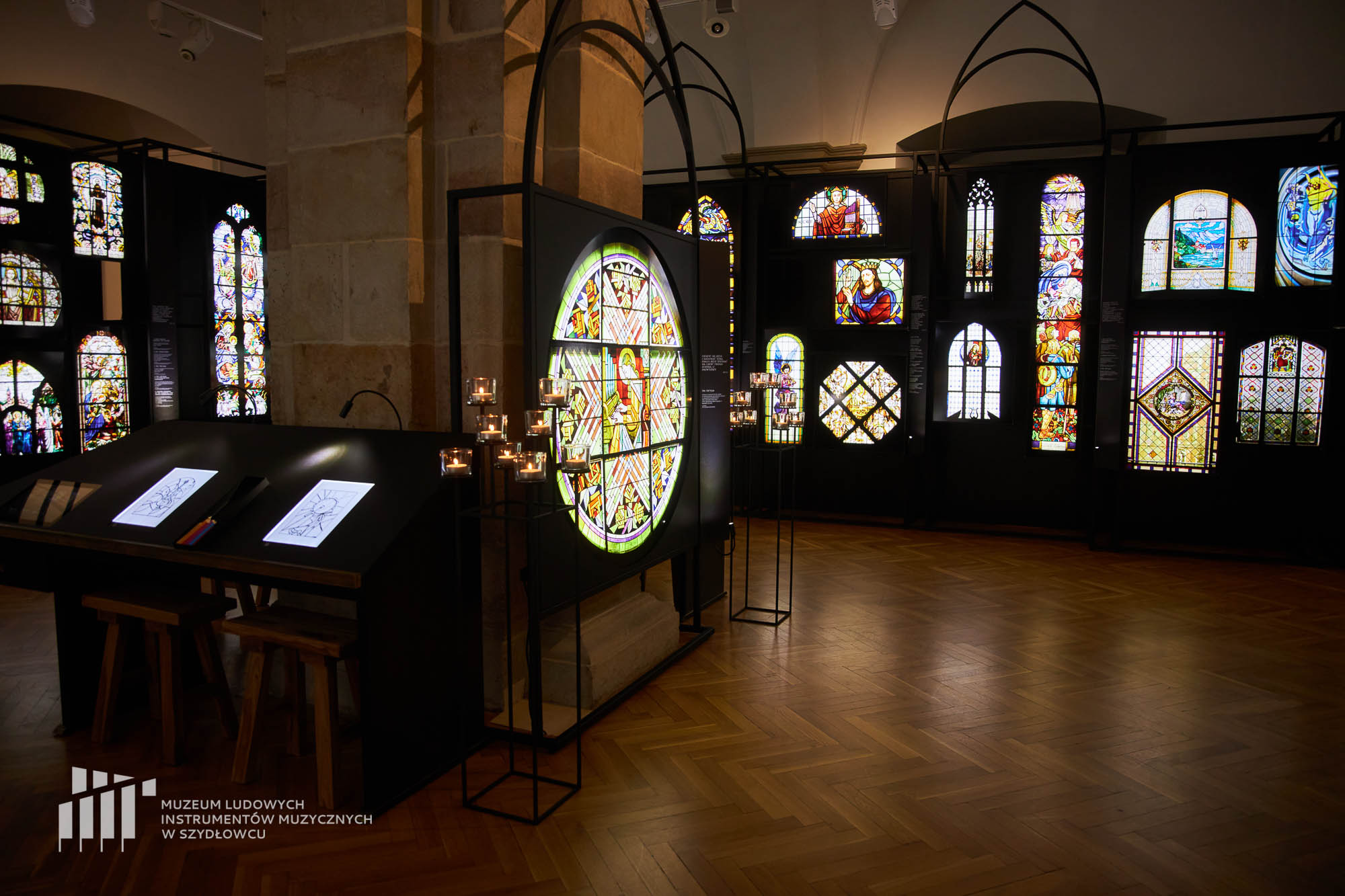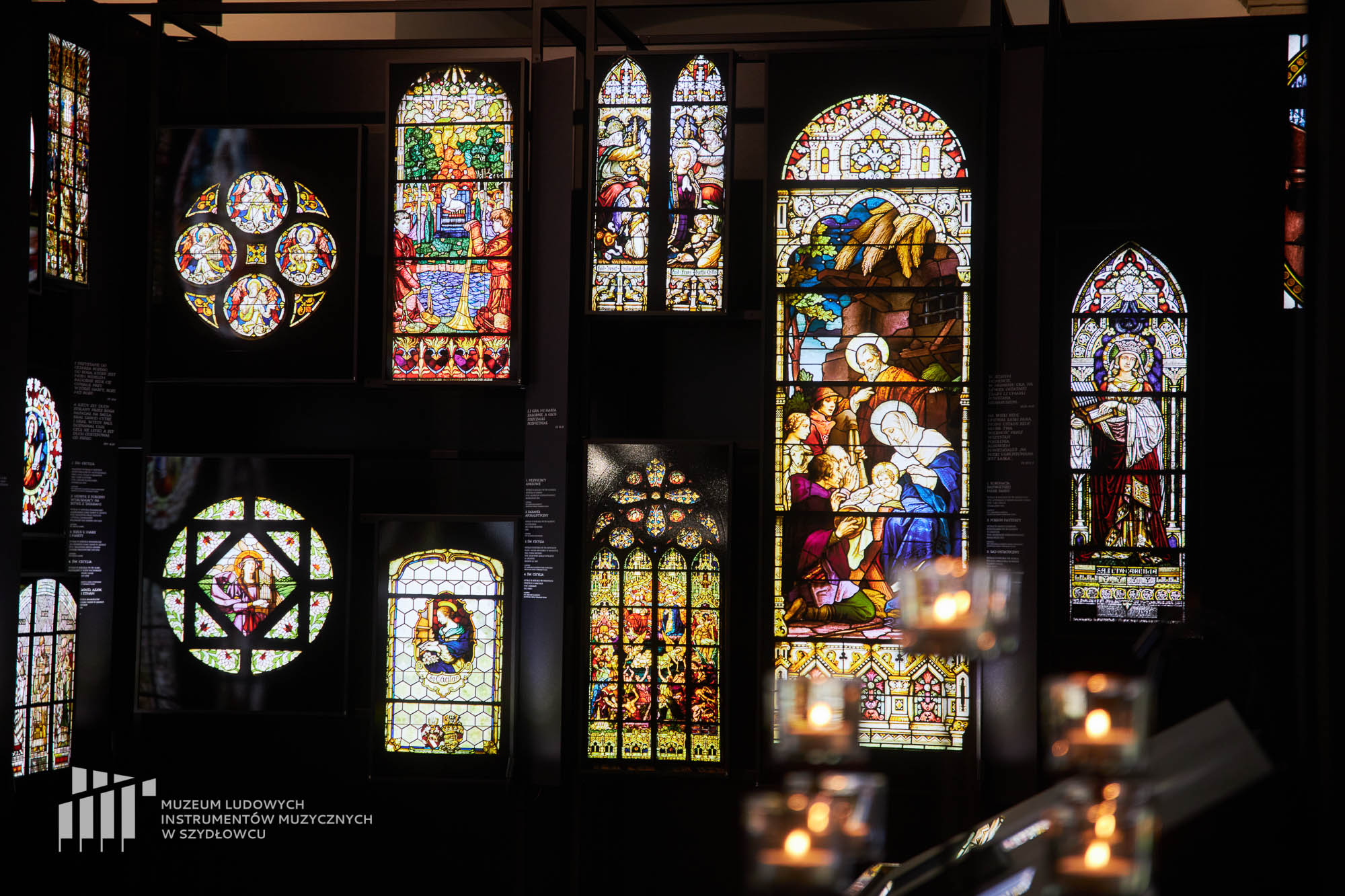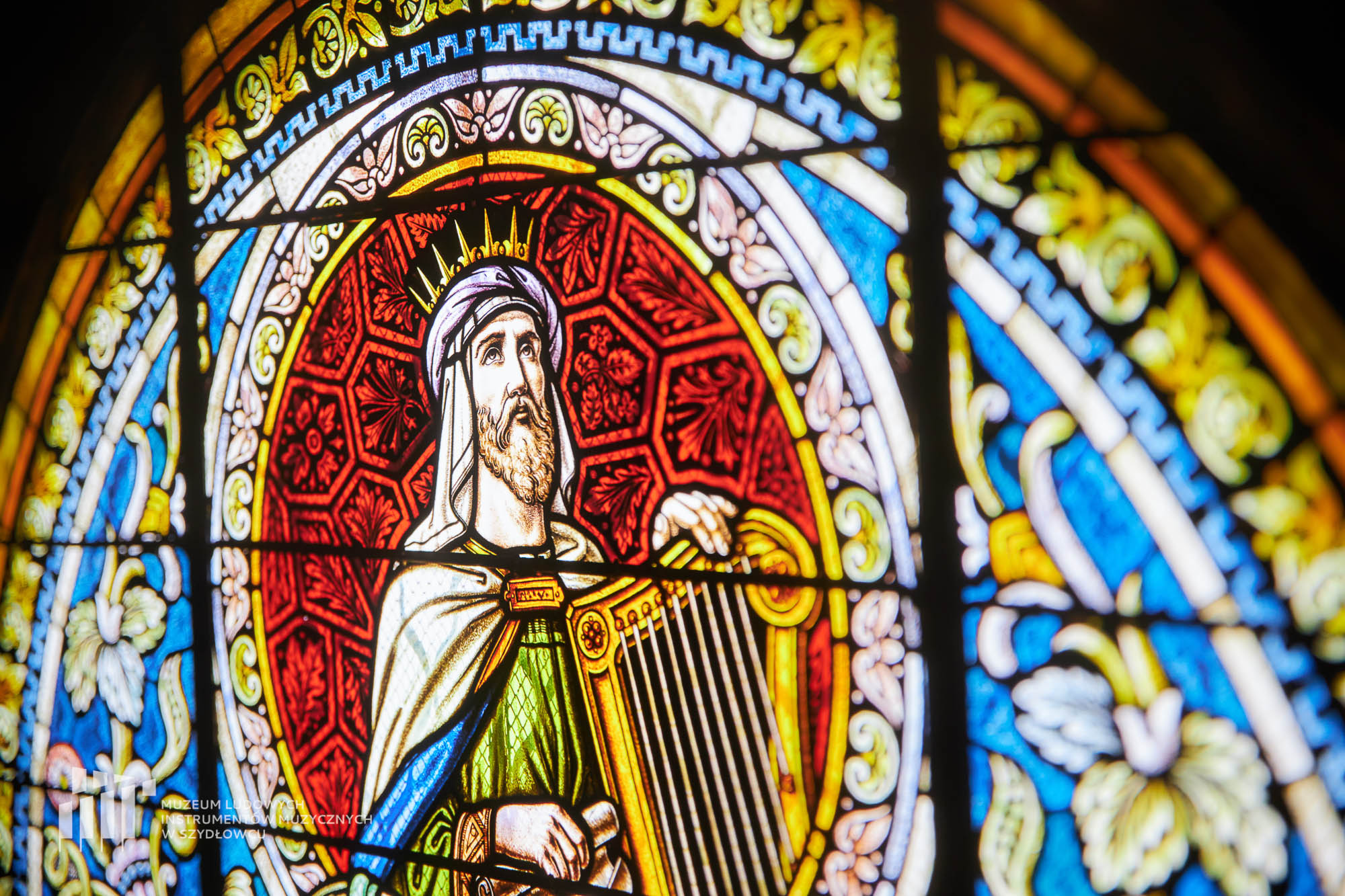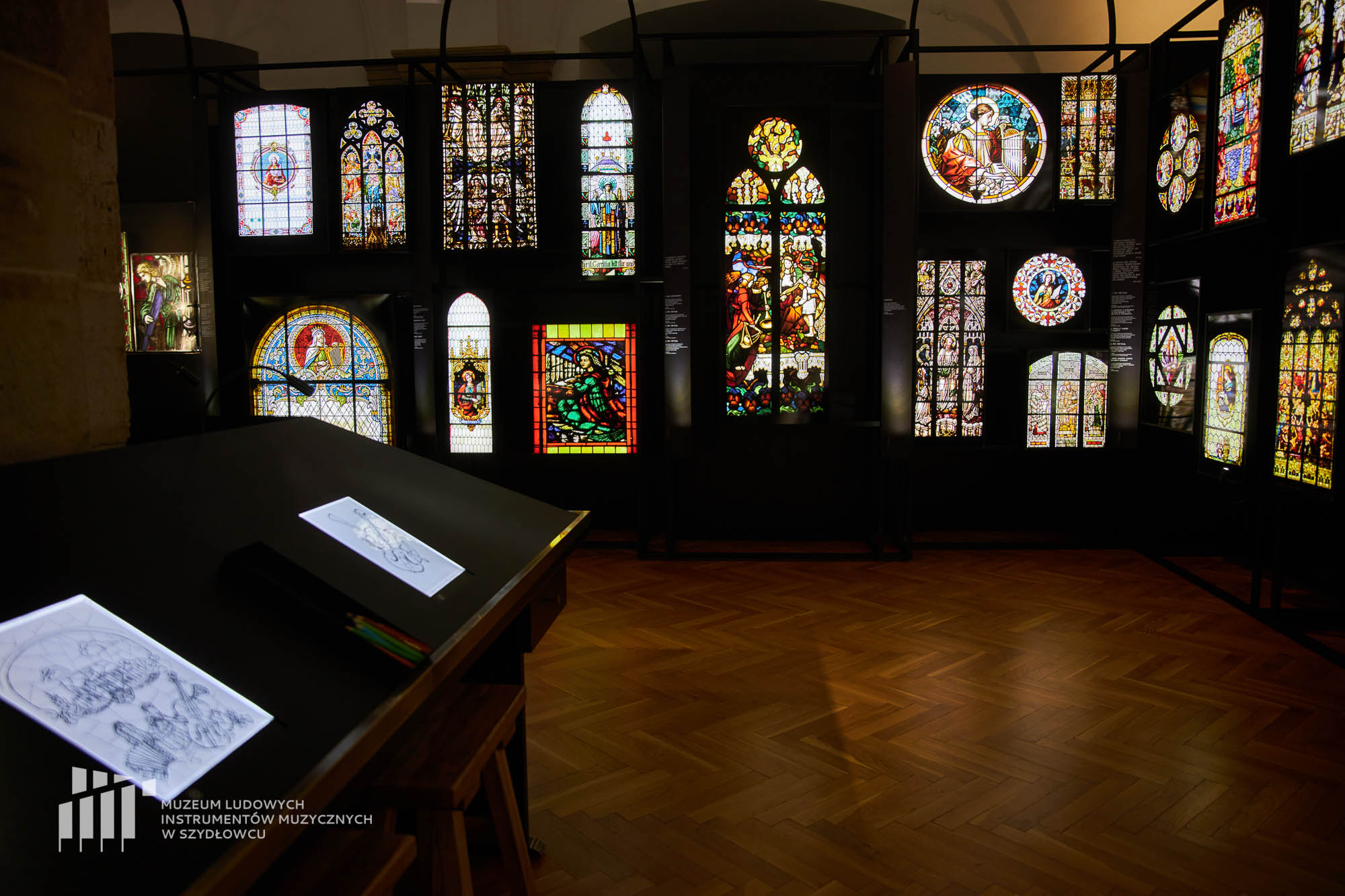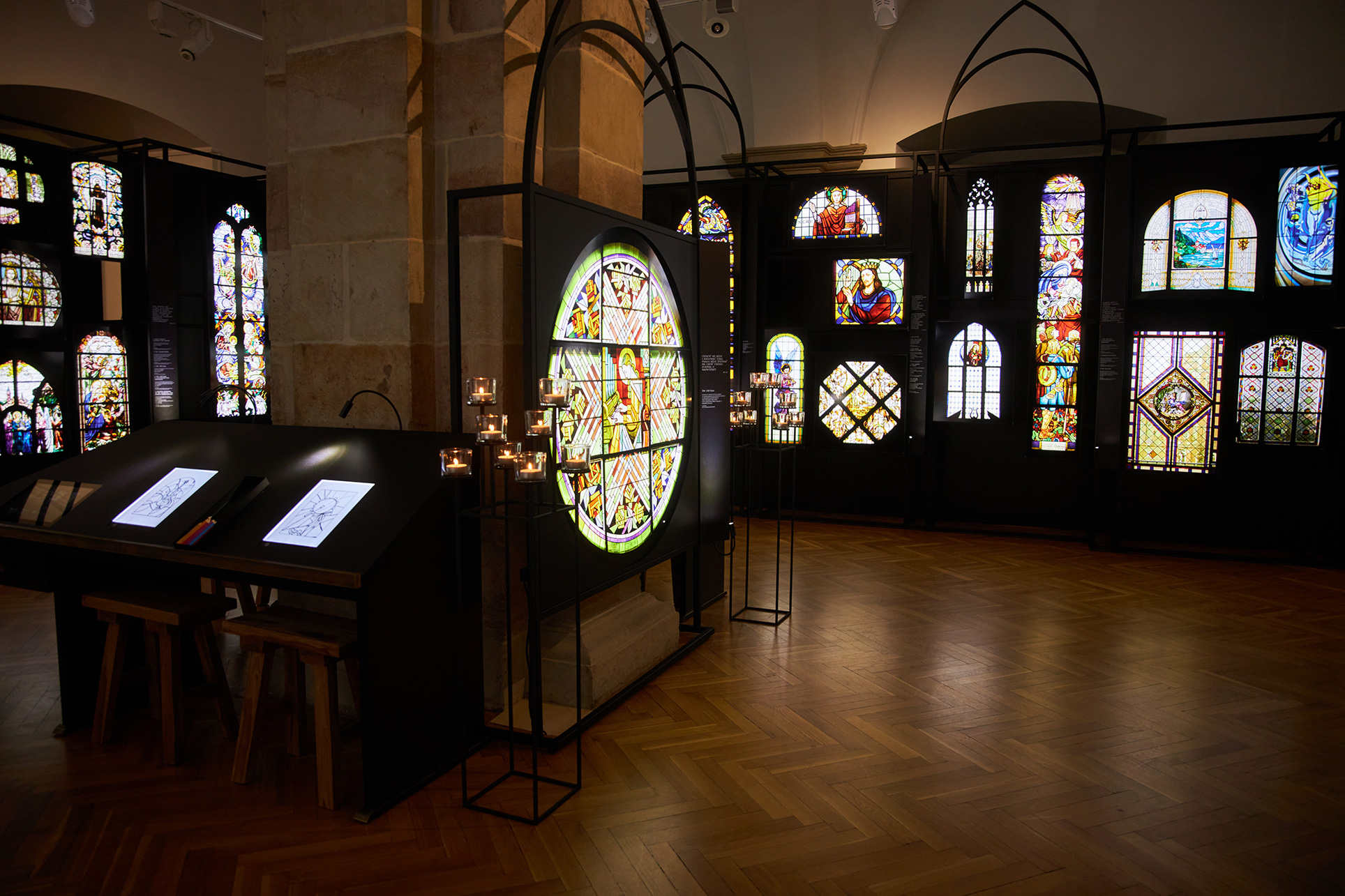

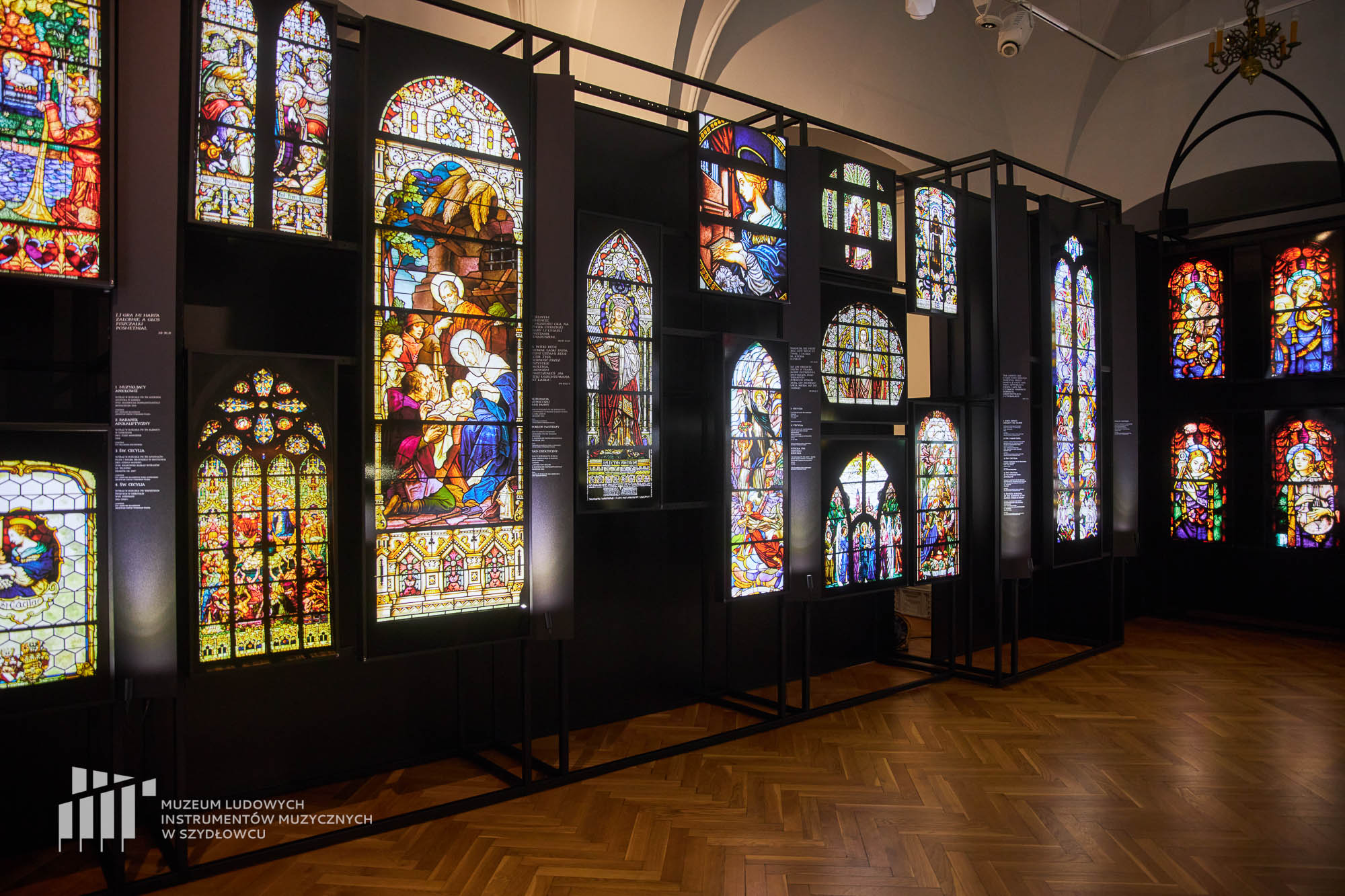
The exhibition “Music of Light. Stained Glass. From Artifact to Metaphysics,” presents the motif of music and musical instruments in stained glass art in an artistic and organological context, from the perspective of philosophical and theological thought, touching on the issue of light, integrally linked to stained glass art for centuries, and in reflection on the symbolism of musical artifacts, their enigmatic nature, and their message.
There are various perspectives on the connections between stained glass and metaphysics. In accordance with the concept of the exhibition creators, the theme is presented from the perspective of artifact to metaphysics, and thus from the work to the mystery – to its experience, which is something very individual and unique. The viewer of the exhibition, with their predisposition to spirituality, with their intuition of mystery, unconsciously becomes a crucial element of the project. This feedback is important because it crucially shapes the mood of the exhibition space. The exhibition neither explains nor answers the question: what metaphysics lies behind stained glass? The answer would be very complex, rich in unknowns, and ultimately not entirely true. The mystery of stained glass is created not only by its content, but also by its presentation – often dictated by the era’s style in which it was created – by the arsenal of means chosen by the artist, or by the artist’s declaration, but, as mentioned, it also resonates with the viewer. It is an artifact that moves through the interplay of colour and light, sometimes even independently of its subject matter. We only know that the basic elements that constitute its phenomenon allow us to experience a touch of the spiritual world.
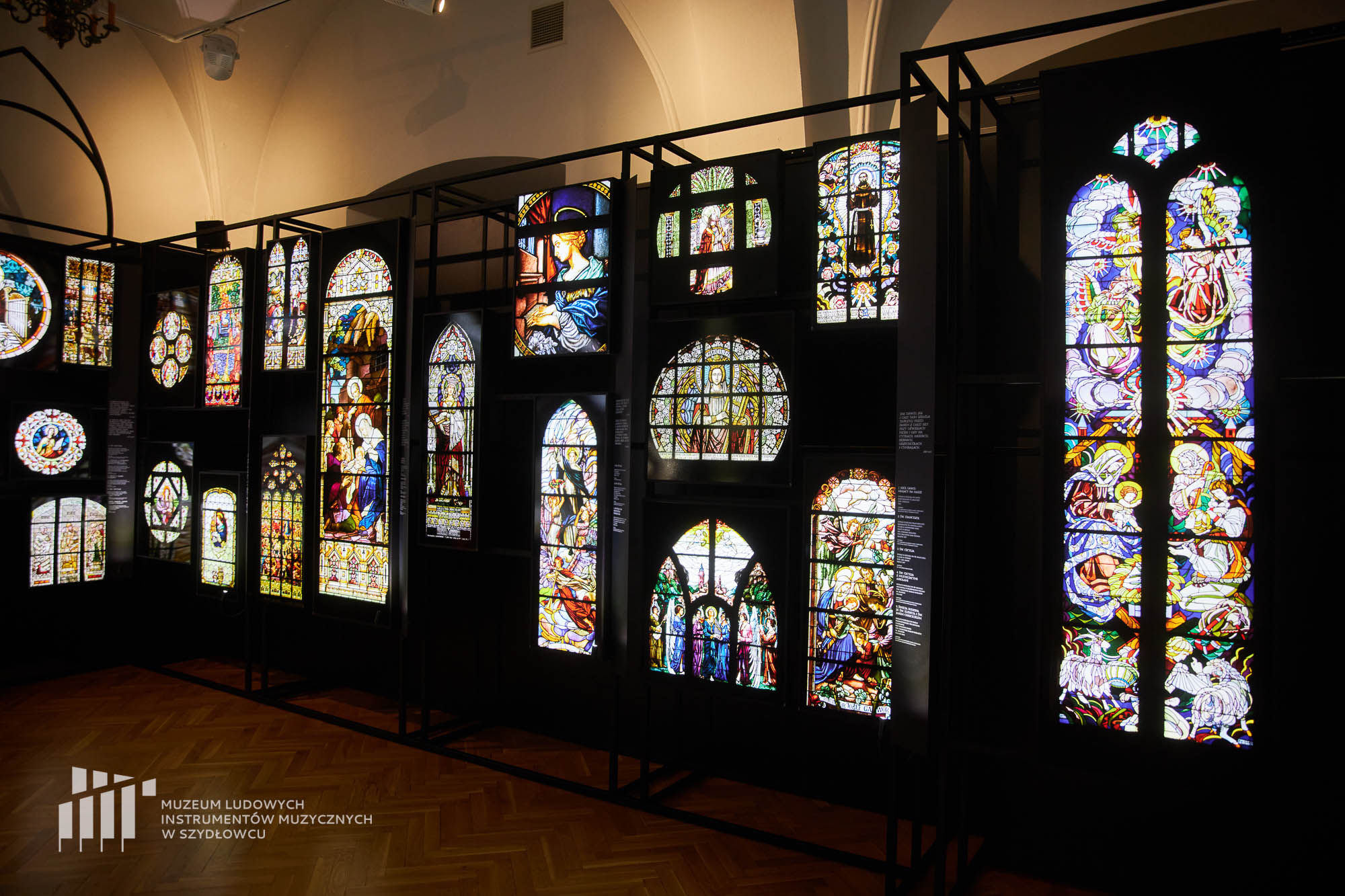
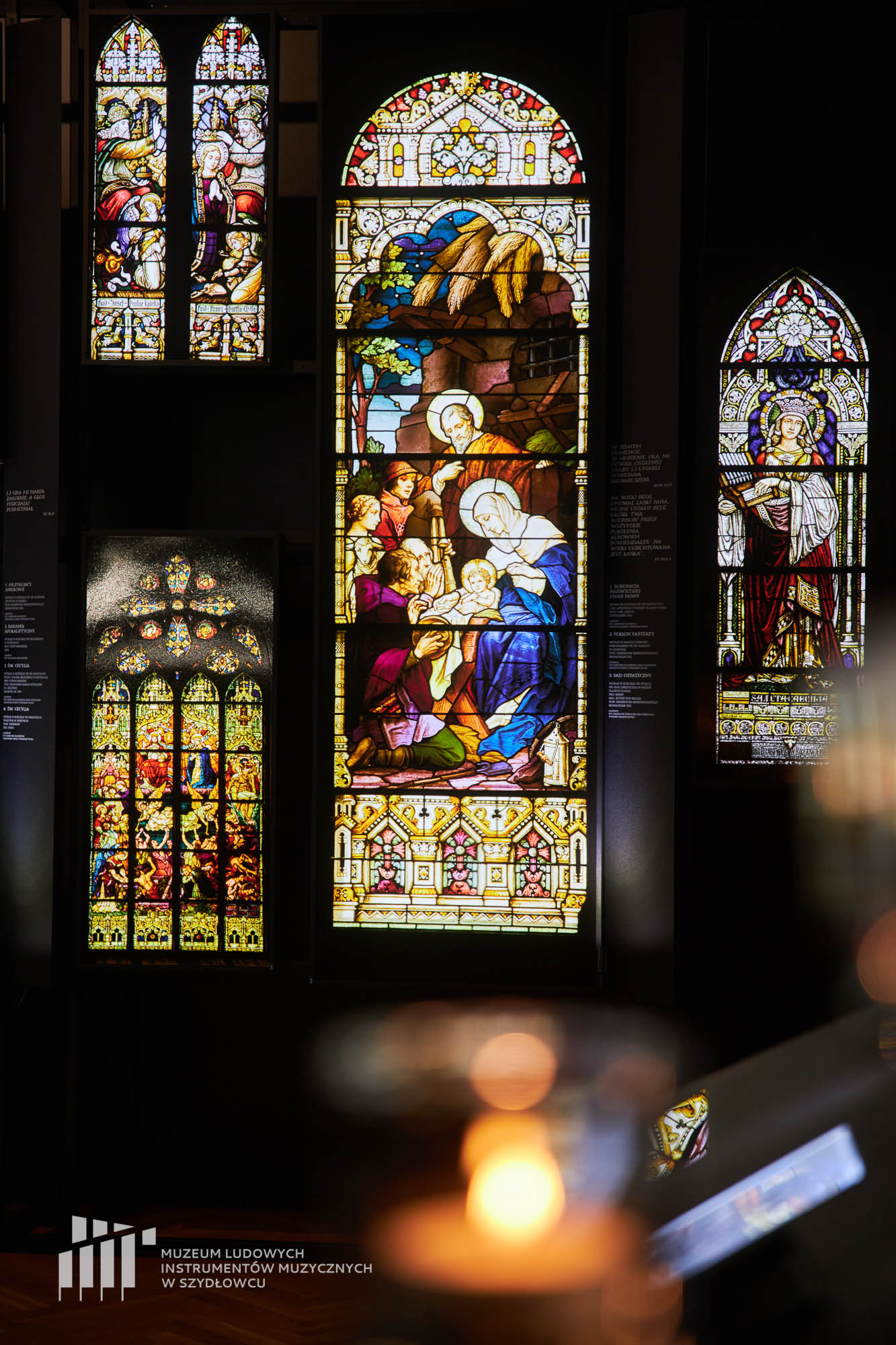
The exhibition features 60 stained glass windows, primarily from churches but also from secular buildings – two original stained glass panels on loan from the Nicolaus Copernicus Museum in Frombork and the Jagiellonian University Collegium Maius Museum in Krakow, as well as 58 digital photographs in the form of lightboxes. The oldest photographically reproduced works date from the 15th century, from the Corpus Christi Church in Krakow and the Dominican Museum in Krakow. The most numerous are those from the Renaissance period of stained glass art – from the early 20th century to the 1930s.
Original stained glass windows are commonly found in churches, chapels, museums, galleries, schools, and other public buildings located in both large cities and small towns across present-day Poland, primarily Lesser Poland (Małopolska) and Silesia, as well as Greater Poland (Wielkopolska), Pomerania, Warmia and Mazury, Subcarpathia, and the Łódź Voivodeship.
The stained glass designs were created by renowned, distinguished artists, such as Stanisław Wyspiański and Józef Mehoffer, as well as lesser-known artists, some now almost forgotten, including Stefan Matejko, Jan Bukowski, Antoni Procajłowicz, Wojciech Durek, Zdzisław Gedliczka, Jan Śliwiński, Hans Rossmann, Wilhelm Ritterbach, Richard Holzner, Franz Xaver Wilfried Braunmiller, Josef Plattner, and Karl Polster. The stained glass windows were created in workshops in Krakow, Piła, Wrocław, Berlin, Munich, Qwedlinburg, Frankfurt am Main, Trier, Koblenz, Freiburg im Breisgau, Vienna, and Innsbruck.
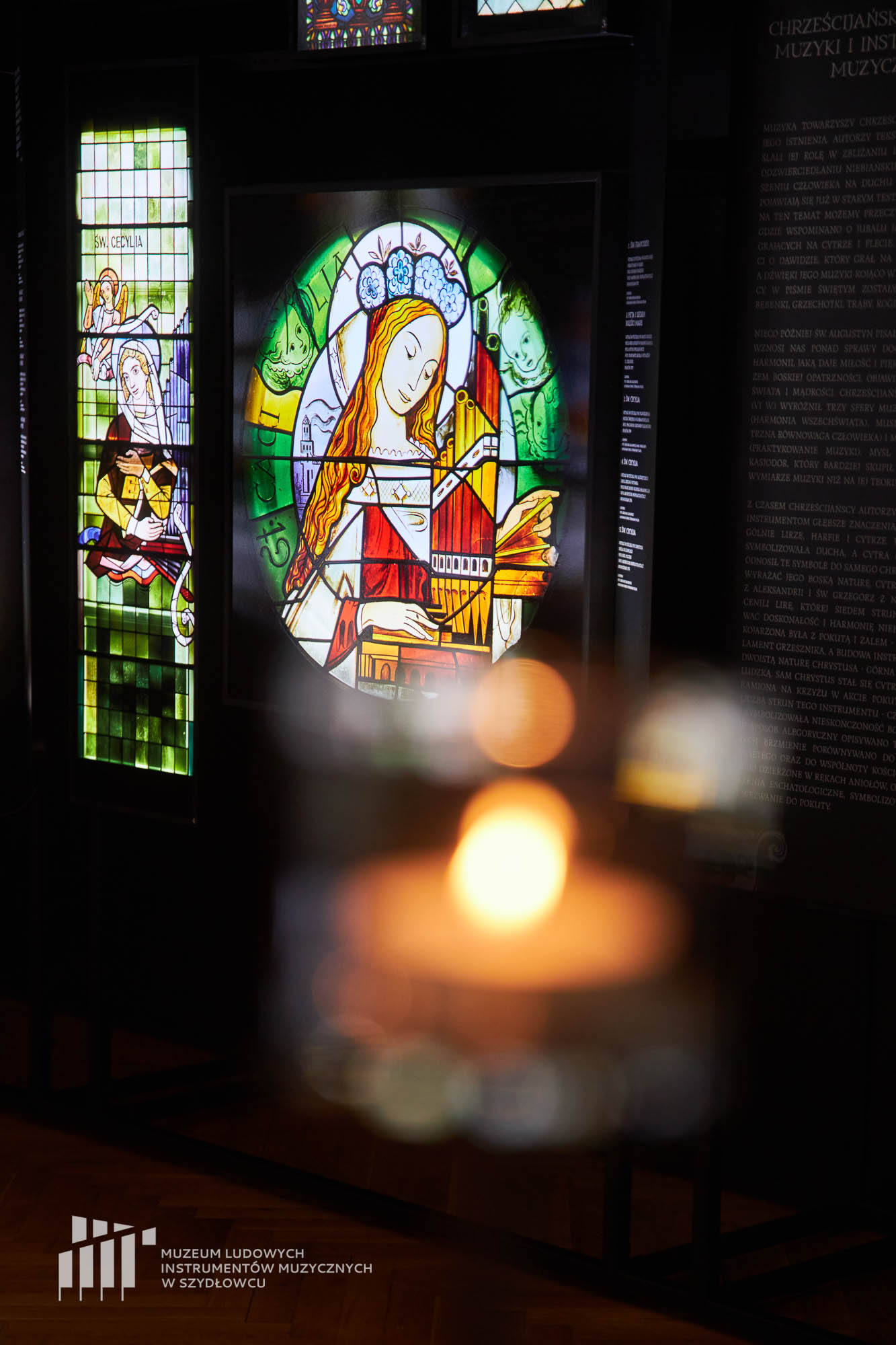
Zdzisław Gedliczka’s stained glass window from 1934/1951, designed in the spirit of the Art Deco style, characterized by geometric forms and a focus on a synthetic approach to the subject matter, depicting Saint Cecilia playing the organ, which adorns the choir of the convent chapel of Saint Joseph – the heart of the Sanctuary of Divine Mercy in Krakow-Łagiewniki – occupies a special place in the exhibition. Visitors to the sanctuary, gazing at the world-famous image of the Merciful Christ – the painting by Adolf Hyła, “Jesus I Trust in You” – can see reflected in it the stained-glass image of the patroness saint of singing and music, the spiritual protector of organists, composers, choirs, church music ensembles, and musical instrument builders. Hardly visible from the chapel’s exterior, despite its impressive dimensions, it unexpectedly reveals its presence, reflecting the figure of the Saviour radiating love. It serves as a reminder that music leads to the centre of our existence and is one of the most beautiful expressions of God’s perfection.
dr Aneta I. Oborny
Director of the Museum
of Folk Musical Instruments
in Szydłowiec